good cateress newsletter May 2010
May, a beautiful month; one of my favourites as the earth renews itself. Well, most of the time. This year in the North East we seem to vacillate between July’s heat and March’s chill. The wind this last week has really battered all the plants in my Harlem garden; that got ahead of themselves in the heat of the previous weeks , when it felt more like July.
In my late teens early twenties, May was a favorite, the promise of warm summers, could be found in the late afternoons as the days stretched out. Mornings would start chilly, with a light mist along the river Medina banks, rolling on to the fields. By early afternoon the sun would be out, the air was warm and fragrant with flowers and blossom. In the garden the honeysuckle and climbing roses were flowering, the bees drunk with pollen, the giant Perry pear tree was white with blossom. The broad beans (fava beans) that had been planted in the autumn, were getting ready to be picked; the peas were forming.
Some afternoons I would walk up the hill, following the old Public Footpath, across Farmer Williams fields to Whippingham church. A royal church built by Prince Albert for Queen Victoria and her family when they were at Osborne House. But beyond that, one of the churches, belonging to the four parishes along the river Medina where my family were christened, married and buried for generations, as we found out when Diana one of my cousins, an archivist discovered as she built the family tree, managing to go back to the 15th century.
In the first field the path was well worn and I could go barefoot in the low soft grass, careful not to put my foot down on a hidden thistle! The grass cool and easy on my feet. On either side the hay would be growing in, bees and pale blue “Common Blue” butterfly and the occasional tortoiseshell Butterfly were busy flitting from flower to flower in the afternoon sun.
Entering the gloom of the next small copse, I would put my shoes back on, it was always muddy here. Walking over the bridge across the stream, I would look to see if the cows were around, further down into the copse. I would hope so, as it would make the rest of the walk easy. But no sight of them. Back up the hill and out into the bright sun, and yes, there were the cows. OK they were too far away to pay any attention to me, or worse luck, they were in the top field, by the stye. I would have to walk through them. How I hated that. They always made me nervous. They would spot me and started ambling towards me. One of the younger bullocks would start running. Walk, calmly and steadily, make no sudden moves, I keep telling myself. The herd are now walking with me, taking it in turns to get close and check me out. I can smell the sweet grass on their breath as they breath. The dogs are off somewhere else checking for rabbits. But no, here comes Bilbo - my golden retriever -back to check on me and making the cows frisky. I have to smack them away, wishing I had picked up a stick to swish them with. Now I am at the next stye. With any luck the cows will be back in the bottom field when I return.
On up the hill. Some days when I am not being chased by cows, I can feel my ancestors spirits walking the hill with me, on their way to church. I have a squishy wicker basket with me. I am going to pick elder flowers, to turn into a facial astringent and elderflower cordial.
Other days I walk in the early evening and walk south along the river bank to Newport. Crossing the bridge over the first creek, I look up the creek, shall I walk up the creek to see if I can spy the Kingfisher. No, I walk diagonally across the field. These fields too, are hay fields but grow differently as they are more buffeted by the wind along the river, when storms come in the first field is full of gulls. I climb the gate into my favourite hay field. The hay is up to my knees, full of tall grasses, buttercups, clover, vetch, daisies, I brush my hands along the tops.
I am heading to the next creek, it is deeper, wider, tidal; there are a group of oaks in a break along the hedgerow of May, sloe, hawthorne, brambles. It is impenetrable apart from this point. I hope to reach it before the dogs, who have loped off following a scent. I quietly sit down under the oaks. Yes, there is the Heron, tall and grey, his gaze does not waver from the water, until the dogs come crashing to find me, then he opens his wings and ponderously rises into the oaks on the other side of the creek, before noisily flapping off back to the river. The pair of swans have cygnets and I watch them gliding through the water, following their parents. I look down at my jeans and sneakers, they are yellow with pollen from the buttercups.
A few weeks later, the hay is mown and fat brown cows are back in the field. These are never chasing cows! Maybe the hay is too rich and they are more content?
So, where have all the cows gone? I recall driving, and frequently having to stop when cows were moved from field to milk shed, or newer pastures. It was always one of those annoying but great things about living in the country; like following a tractor full of hay bales, traveling at 20mph along a main road. I seem to rarely see cows in fields any more.
I am looking forward to the imminent arrival of the local strawberries, small, sweet and tart. The local strawberries conform to my image of a strawberry, about the size of my thumb nail, crimson, sweet smelling and tasting. What have Driscol done to this berry? It is now a Frankenfruit, huge and tasteless. The size of a regular apple, again not a frankenfruit that weighs a pound and can feed 4 from one apple, but one that fits comfortably in the size of my palm and is a pleasure to munch on. Bigger is not better. I know we are trying to feed the world, but not if we have to throw half the fruit away because it is too big or flavorless. A few weeks ago I was delighted to find Florida strawberries, that looked and tasted as a strawberry should. Winter citrus is the same; clementines used to be delicious but the growers have abominated them.
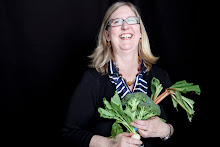
While in London recently, my cousin Sue Searle, made delicious Panna Cotta with Rhubarb compote.
Panna Cotta with Rhubarb compote
2 tablespoons water
1 1/4 teaspoons unflavored gelatin - one packet
2 cups whipping cream
1 1/4 whole milk yoghurt - I like Hawthorne farms
1 teaspoon vanilla extract
1/2 cup sugar
Pour 2 tablespoon water into small bowl, sprinkle gelatin over. Let stand until softened, about 15 minutes. Whisk 1 cup cream, yoghurt and vanilla in large bowl. Heat remaining I cup cream and 1/2 cup sugar in small saucepan over medium heat, stirring until sugar dissolves and cream comes to simmer. Remove from heat. Add gelatin mixture, stirring to dissolve gelatin. Mix hot mixture into yoghurt mixture. Divide mixture into 6 ramekins and cool uncovered. When cool, cover and refrigerate.
1 lb Rhubarb, 2 teaspoons grenadine, 1 teaspoon rose water, 2 tablespoons sugar
Place in oven proof bowl. cover and cook for 15 minutes. Turn oven off and leave rhubarb in until cool. Taste add more sugar if needed.
Un-mold Panna Cotta on to plate with a couple of spoonfuls rhubarb compote. serve.
"'Tis like the birthday of the world, When earth was born in bloom; The light is made of many dyes, The air is all perfume: There's crimson buds, and white and blue, The very rainbow showers Have turned to blossoms where they fell, And sown the earth with flowers." - Thomas Hood
posted by Jane, good cateress @ 12:08 PM
0 Comments


0 Comments:
Post a Comment
Subscribe to Post Comments [Atom]
<< Home